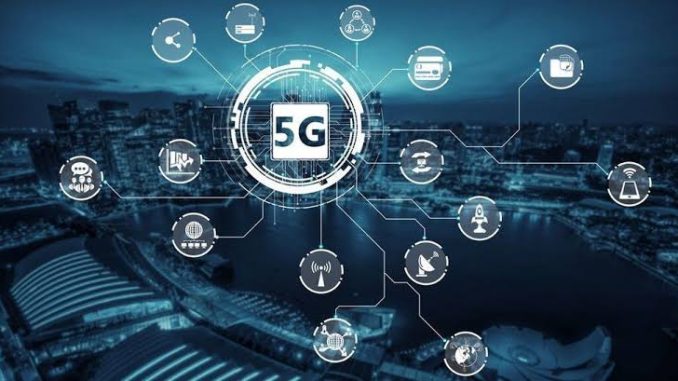
The rollout of 5G technology represents a significant milestone in the evolution of wireless communication, promising to revolutionize connectivity and unlock new opportunities for innovation across industries. With its potential to deliver faster speeds, lower latency, and greater capacity than previous generations of wireless technology, 5G has the power to transform the way we live, work, and interact with the world around us. In this article, we explore the revolution of 5G technology, its applications, benefits, and implications for businesses and consumers alike.
At its core, 5G technology represents the fifth generation of wireless communication standards, building upon the foundation laid by previous generations such as 4G LTE. While 4G focused primarily on delivering faster mobile broadband speeds, 5G aims to provide a more holistic and transformative wireless experience, enabling a wide range of new applications and use cases that were previously not possible.
One of the key features of 5G technology is its ability to deliver faster speeds and lower latency than previous generations of wireless technology. With peak speeds potentially reaching up to 20 gigabits per second (Gbps) and latency as low as 1 millisecond (ms), 5G has the potential to support a wide range of bandwidth-intensive applications, such as ultra-high-definition video streaming, virtual reality (VR), augmented reality (AR), and real-time gaming.
Moreover, 5G technology offers greater capacity and network density than previous generations, enabling more devices to connect simultaneously and supporting the growing number of Internet of Things (IoT) devices and sensors deployed in smart cities, smart homes, and industrial environments. This increased capacity and network density are essential for supporting the proliferation of connected devices and applications that rely on real-time data processing and analysis.
Furthermore, 5G technology introduces new network architectures and technologies, such as network slicing, edge computing, and massive multiple-input multiple-output (MIMO), that enhance the flexibility, scalability, and efficiency of wireless networks. Network slicing allows operators to create virtualized network slices tailored to specific use cases and applications, such as enhanced mobile broadband, massive IoT, and mission-critical communications. Edge computing brings computing resources closer to the end-user, enabling faster response times and reducing the need to transmit data back and forth to centralized data centers. Massive MIMO technology utilizes multiple antennas to increase network capacity and coverage, enabling more efficient use of spectrum and better performance in dense urban environments.
Moreover, 5G technology has the potential to transform industries such as healthcare, manufacturing, transportation, and entertainment by enabling new applications and use cases that leverage its high-speed, low-latency connectivity. In healthcare, 5G-enabled telemedicine and remote patient monitoring solutions enable healthcare providers to deliver high-quality care to patients in remote or underserved areas, improving access to healthcare services and reducing healthcare costs. In manufacturing, 5G-powered industrial IoT applications enable real-time monitoring and control of factory equipment, predictive maintenance, and autonomous robotics, enhancing efficiency, productivity, and safety on the factory floor. In transportation, 5G-enabled connected vehicles and smart transportation systems enable real-time traffic management, vehicle-to-vehicle communication, and autonomous driving, reducing traffic congestion, accidents, and emissions. In entertainment, 5G technology enables immersive experiences such as virtual reality (VR), augmented reality (AR), and live streaming of ultra-high-definition (UHD) video content, transforming the way we consume and interact with digital media.
Despite its potential, 5G technology also poses challenges and considerations that must be addressed to realize its full potential. One of the biggest challenges facing 5G deployment is the need for massive infrastructure investment, including the deployment of new base stations, antennas, and fiber-optic cables to support the increased bandwidth and capacity demands of 5G networks. Moreover, 5G technology requires access to spectrum bands with sufficient bandwidth to deliver high-speed, low-latency connectivity, which requires coordination and allocation of spectrum resources by governments and regulatory bodies.
Furthermore, 5G technology raises concerns about potential health and safety risks associated with exposure to electromagnetic radiation emitted by wireless devices and infrastructure. While extensive research has been conducted to assess the health effects of electromagnetic radiation, including radiofrequency radiation emitted by 5G devices and antennas, concerns remain about the long-term health impacts of prolonged exposure to high-frequency electromagnetic fields. To address these concerns, regulatory bodies and health organizations have established guidelines and standards for electromagnetic radiation exposure limits, as well as ongoing research efforts to monitor and assess the health effects of 5G technology.
In conclusion, the revolution of 5G technology represents a significant milestone in the evolution of wireless communication, with the potential to transform connectivity and unlock new opportunities for innovation across industries. From faster speeds and lower latency to greater capacity and network density, 5G has the power to revolutionize the way we live, work, and interact with the world around us. However, realizing the full potential of 5G requires addressing infrastructure challenges, regulatory considerations, and health and safety concerns to ensure that 5G technology benefits society as a whole.