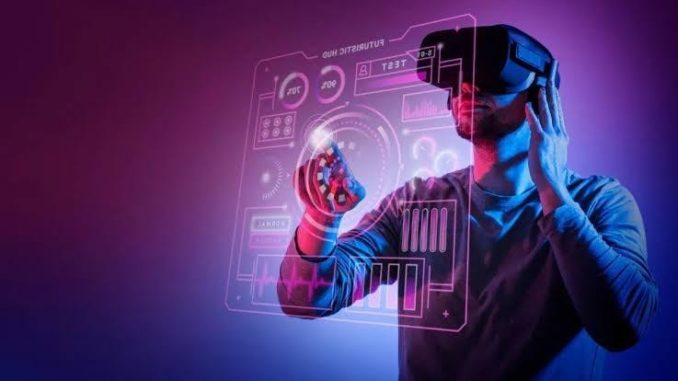
Virtual Reality (VR) has emerged as a transformative technology, offering immersive experiences that blur the line between the physical and digital worlds. From gaming and entertainment to education and healthcare, VR has the potential to revolutionize how we learn, communicate, and interact with the world around us. In this article, we delve into the evolution of virtual reality, its applications, benefits, and the potential impact on various aspects of society.
At its core, virtual reality is a computer-generated simulation of a three-dimensional environment that users can interact with in a realistic and immersive way, typically through the use of head-mounted displays and motion-tracking sensors. VR technology creates the illusion of presence, transporting users to virtual worlds and enabling them to explore and interact with digital environments as if they were physically present.
The roots of virtual reality can be traced back to the mid-20th century, with early experiments and prototypes dating back to the 1950s and 1960s. However, it wasn’t until the late 20th century that VR technology began to gain traction, with the development of immersive headsets and graphics rendering engines that could create realistic virtual environments. The 1990s saw the commercialization of VR technology, with the release of consumer-grade VR headsets such as the Virtual Boy and the emergence of VR arcades and entertainment venues.
In recent years, advancements in hardware and software have propelled virtual reality into the mainstream, enabling immersive experiences that rival the realism and interactivity of the physical world. High-resolution displays, advanced graphics rendering techniques, and sophisticated motion-tracking sensors have enhanced the fidelity and immersion of VR experiences, while innovations in haptic feedback technology have added a new dimension of realism by simulating tactile sensations and interactions.
One of the most promising applications of virtual reality is in the field of gaming and entertainment, where VR technology enables players to step into immersive worlds and experience games in a whole new way. VR games and experiences range from realistic simulations of real-world activities such as racing, flying, and sports to fantastical adventures set in fictional worlds filled with monsters, magic, and exploration. VR gaming has the potential to revolutionize the gaming industry, offering unprecedented levels of immersion and interactivity that traditional gaming experiences cannot match.
Moreover, virtual reality has applications beyond gaming and entertainment, with potential use cases in a wide range of industries and sectors. In education, VR technology enables immersive learning experiences that engage students and enhance retention and understanding of complex concepts. From exploring ancient civilizations to conducting virtual science experiments, VR can transport students to places and situations that would be impossible or impractical to experience in the real world.
Furthermore, virtual reality has the potential to revolutionize healthcare by enabling medical training, patient rehabilitation, and therapeutic interventions in immersive virtual environments. Medical students can practice surgical procedures and anatomy lessons in realistic VR simulations, while patients undergoing physical therapy can use VR-based exercises and games to improve mobility and motor skills. VR therapy techniques such as exposure therapy and mindfulness meditation have shown promise in treating mental health disorders such as phobias, PTSD, and anxiety.
Additionally, virtual reality has the potential to transform how we communicate and collaborate in remote work and social settings. VR technology enables virtual meetings and conferences where participants can interact with each other in immersive virtual environments, regardless of their physical location. From virtual offices and classrooms to social gatherings and events, VR has the potential to bring people together in ways that transcend the limitations of time and space.
Despite its potential, virtual reality also faces challenges and limitations that must be addressed to realize its full potential. High costs, technical barriers, and usability issues are among the key challenges facing VR adoption, as consumer-grade VR headsets and hardware remain relatively expensive and require powerful computing resources to run immersive experiences smoothly. Moreover, concerns about motion sickness, eye strain, and discomfort in VR experiences pose barriers to widespread adoption and acceptance of VR technology.
In conclusion, virtual reality represents a transformative technology with the potential to revolutionize how we learn, communicate, and interact with the world around us. From gaming and entertainment to education, healthcare, and remote work, VR has applications across a wide range of industries and sectors, offering unprecedented levels of immersion, interactivity, and engagement. However, realizing the full potential of virtual reality requires addressing technical, usability, and cost barriers, as well as fostering innovation and collaboration to drive adoption and implementation of VR-based solutions. As VR technology continues to evolve and mature, it has the potential to reshape the way we experience and interact with the digital world, unlocking new possibilities for creativity, exploration, and human connection.